

The core application scenarios of stage electric hoists revolve around the lifting and installation of stage equipment, mainly focusing on three major fields: professional performances, event setup, and venue operation and maintenance.
1. Professional Performance Scenarios
This is its most core application field, directly determining the presentation quality of stage visual and audio effects, and serving as a key equipment to ensure the fluency and artistry of performances.
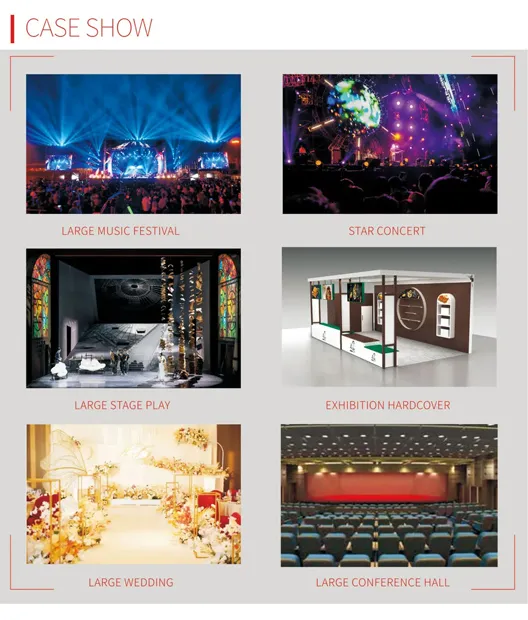
Lifting and Precise Control of Lighting Equipment
It is used to suspend various professional stage lighting fixtures such as moving head lights, follow spots, PAR cans, beam lights, and wash lights. It enables flexible adjustment of the lighting's vertical height and horizontal position, and precise positioning of the lighting's irradiation angle and range.It supports dynamic lifting and switching of lighting during performances. For example, at the beginning of a show, the lights slowly lower from a high position to create an atmosphere; or the lighting position is quickly adjusted according to the plot rhythm, matching with light and shadow effects to enhance the appeal of the performance.It can work with a lighting console to realize the synchronous operation of multiple hoists, ensuring the consistency of group light lifting and creating a neat and uniform light show effect.
Suspension of Audio Equipment and Sound Field Optimization
It is used to hoist professional audio equipment such as line array speakers, subwoofers, and monitor speakers. These devices are fixed on the truss above the stage or the steel frame on the side, avoiding space occupation by ground placement while increasing the sound propagation height.By accurately adjusting the suspension height and angle of the speakers, the sound field coverage is optimized. This ensures balanced volume and clear sound quality in all areas of the audience seats, meeting the acoustic needs of different venues such as large theaters and stadiums.After the performance, the audio equipment can be quickly lowered, facilitating maintenance, debugging, handling, and storage.
Flexible Control of Stage Settings and Props
It is used to lift stage setting elements such as background curtains, gauze curtains, star curtains, and LED displays. It can realize quick switching and layered lifting of curtains according to the plot development. For instance, when one act ends, the curtain slowly closes; when the next act starts, it quickly rises, ensuring smooth connection.It can hoist or move large stage props, such as simulated building models, sculptures, scene pieces, and lifting stage platforms. It easily completes the on-stage, off-stage, and position adjustment of props, and cooperates with the plot advancement to realize the three-dimensional transformation of scenes.For complex performances such as musicals and operas, it can realize the synchronous lifting linkage of stage settings and props. For example, while the background curtain rises, the prop platform slowly ascends, creating an immersive stage scene.